
EcSA Initiative
Economic Security for All (EcSA) is a state funding stream for Workforce Development focused on poverty prevention and reduction. It enhances and aligns existing programs and resources in local workforce systems across the state to move individuals from poverty, or at risk of falling into poverty, to self- sufficiency.
*Data points from July 2023 – June 2026
WWA’s top priority is to enhance Economic Security for All resources to increase service levels and simplify the program’s administration. EcSA provides a state funding stream that aligns existing workforce and support programs across the state to amplify their collective impact. These funds are a critical resource that addresses the need to connect businesses with workers and sustain the infrastructure for individuals to receive training and credentialing to be self-sufficient and achieve economic independence. EcSA funds primarily assist traditionally underserved communities, including BIPOC, justice-impacted, and rural populations, in creating generational economic success by providing individuals with the necessary resources and support to thrive in the workforce.
EcSA received $13.338 million last biennium via a mix of state and federal discretionary funds. The current budget holds it at $12.33 million in maintenance-level funding. With another state budget shortfall ahead, cutting EcSA now would cost the state more in the long run.
EcSA makes existing government programs more accessible and effective.
A June 2025 evaluation of EcSA, comparing over 4,400 participants to a matched group of federal Workforce Innovation and Opportunity Act (WIOA) Adult and Youth enrollees, found that co-enrollment in EcSA consistently delivers stronger labor market outcomes— making EcSA a great complement to federal WIOA investments. Outcomes include:
- Higher employment and hours worked: EcSA co-enrolled participants were 14% more likely to be employed and 21% more hours worked.
- EcSA participants earn 28% more upon completion of the program.
- Stronger earnings and wages: EcSA co-enrolled participants earned $12,000 more over eight quarters and had $2.50-$4.75 higher hourly wages
- EcSA complements WIOA – Offering Greater Training & Service Access
- Over 50% of EcSA co-enrolled participants entered training, up from 13% in WIOA-only participants.
- The combination of EcSA and WIOA allowed for twice as many services, showing more intensive and effective support for participants to achieve self-sufficiency.
- 11.3% of EcSA participants were unhoused at the time of enrollment, close to twice as many as those enrolled in the WIOA programs alone (6.1%) – leveraged together, Local Boards can assist more vulnerable residents.
Washington Responds to Shifting Federal Policies
EcSA is a critical tool to help Washington respond to new federal work requirements and the loss of key safety net supports. By connecting participants to training, credentials, and the tools needed to build meaningful career pathways, EcSA empowers individuals to move off state and federal benefit programs and into long-term self-sufficiency. This work has never been more urgent. With 920,000 Washington residents facing the loss of SNAP benefits – an average cut of $55.95 per household per month – and more than 320,000 adults impacted by a $42 billion reduction to Medicaid over the next decade, EcSA provides the bridge from instability to opportunity. It ensures that people are not left behind by Federal changes, but instead supported in achieving economic security and resilience.

EcSA Results: July 2023 – June 2026
- 9,008 job seekers served statewide
- $34,296 saved by taxpayers each year for every person who reaches self-sufficiency
- 65% BIPOC population participation
- 10% of participants were unhoused
- Median wage under $10K at enrollment, $46K–$48K at completion

Return on Investment: July 2025 – June 2026
Taxpayers and budget writers see an immediate return on investment. These are the annual returns and savings:
Based on a $5.8 million investment.
The US Department of Labor has recognized EcSA as a best practice. More information on EcSA can be found in ESD’s 2024 Legislative Report.

Autumn – Workforce Southwest Washington
Autumn, a client at Workforce Southwest Washington, needed help to complete her GED as a critical step to begin her move toward a career pathway. Her income status qualified her for the Economic Security for All (EcSA) program. Once enrolled, Autumn received career coaching, food assistance and incentives that gave her the ability to purchase a car to get to training, workshops to improve her resume, and job interviews. Autumn is now on her way to self-sufficiency.
Andrii – Workforce Southwest Washington
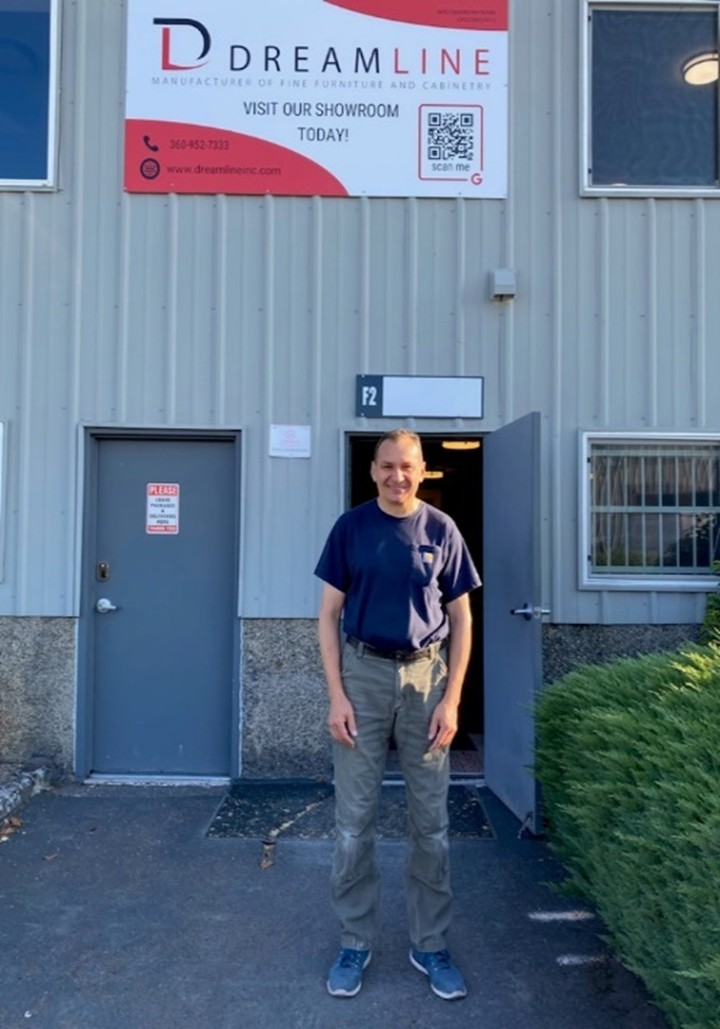
Andrii immigrated to the United States from Ukraine in 2023. When he received his work authorization, he began searching for full-time employment. With the language barrier, he worked with Workforce Southwest (WSW) to be connected with Partners in Careers (PIC) to connect him with an individual that could speak to him in his native language to navigate the supports he needed to complete his paperwork and assess him for services and career pathways. With the support from the Economic Security for All (EcSA), Andrii worked with a business navigator at WSW who helped him gain on-the-job training at Dreamliner and help him buy the tools and clothing for the job. Today, he works full time at the company in a job he loves, making a wage that supports him.

Molly – SkillSource North Central Washington
Molly, like so many others during the pandemic, was impacted by job displacement. She reached out to SkillSource Wenatchee to explore her options to move into a new career. With the support of Economic Security for All (EcSA), the financial help ensured she had stable housing, gas to get to her training and could meet her basic expenses while she completed her program. EcSA funds also paid $10,000 for her training and tuition at Columbia River Institute of Massage to become a licensed massage therapist. Molly has since graduated from the massage program and is now licensed and working at Hurst Chiropractic in Wenatchee.
The Community Reinvestment Program (CRP) is a statewide effort designed to strengthen the workforce and economic development across Washington, prioritizing Black, Latine, and Tribal communities. Local workforce boards are working to implement key components of this project, including direct financial support to participants, support to help businesses grow and thrive, and Matched Investment Savings Accounts (MISAs) that help individuals build financial security. These efforts are designed to create meaningful pathways to economic stability and self-sufficiency for those most in need.
Results: December 2023 – June 2025
12% increase in job seekers served from Black, Latine, and Tribal communities over a 1-year period
Career Accelerator Incentives
- Over 3,300 people served across Washington
- $21,788,000 distributed statewide
Business Support
- 9,500+ businesses have been engaged and supported statewide with grants, technical assistance, and training opportunities.
- Over 700 employers have direct funding through grants and training, helping them grow their business.
- Over $5.6 million has been invested directly into local businesses, giving them the tools to train employees, build resilience, and grow.
Financial Literacy: Matched Investment Savings Accounts
- 370 customers completed personal financial coaching and opened savings accounts.
- Over $5.5 million saved to help customers build long-term financial security.
Source: Employment Security Department Community Reinvestment Project Quarterly Report June 2025